The Importance of Keeping Our Priorities Straight

Rich Baron • November 16, 2023

Defining What Is Truly Important

The past week has been an absolute whirlwind for me, with work taking up most of my focus and leaving little room for anything else, including family. However, life has a way of reminding us where our true priorities lie, and this week brought a wake-up call that I won't soon forget.

Saturday Night
It all started with my daughter's excitement for the Sadie Hawkins dance at her high school. She had meticulously planned her costume alongside her boyfriend, opting for a Harry Potter and Ginny Weasley theme. They had searched tirelessly for the perfect outfits and couldn't wait to enjoy the dance. Since my daughter would be driving, she requested to borrow my wife's new car, a request which turned out to be a blessing in disguise. We snapped a few pictures and sent them off, as they were planning to grab dinner at Trolley Square in Salt Lake City, approximately 35 miles away, before heading to the dance.

As my wife and I started our grocery shopping, an unexpected phone call changed the course of the evening. It was our daughter, her voice trembling with distress. Amidst inconsolable sobs, she revealed the devastating news of a car accident she had just been involved in. The vehicle was a wreck, leaving me desperate to know if everyone was unharmed. Regrettably, her response conveyed a different reality. Nearly paralyzed by worry, she divulged her location and the recent arrival of the police at the scene. Without a moment's hesitation, we abandoned our shopping cart and headed towards Salt Lake City, consumed by anxiety.

As we approached Salt Lake City, the sight of the congestion ahead only heightened our apprehension. Flashing lights from the emergency vehicles illuminated the street, hinting at the gravity of the situation awaiting us. At that moment, nothing else mattered but reaching our daughter's side. Finally arriving at the accident site, relief washed over me as I saw my daughter and her friends standing alongside law enforcement officials. The wrecked car demonstrated the severity of the collision, with deployed airbags serving as a testament to the impact. Fortunately, the injuries proved less severe than initially feared, restricted to superficial burns on my daughter's hands and knees from the airbags. Fortunately, no one else was injured during the incident. The car had done its job of protecting the occupants. Other couples were accompanying them in separate vehicles, providing them with additional space. This fortunate turn of events meant that my daughter and her friends were able to proceed with their plans for the rest of the evening.

A Course Correction
After that fateful night, I have been doing a lot of soul-searching and contemplating my recent path. It saddened me to realize how my work had recently engulfed me, leaving little room for what truly holds significance in my life. Engrossed in this self-examination, I have begun jotting down the aspects that truly matter to me, and the revelations have been nothing short of eye-opening. It dawned on me that amidst the chaos, I may have overlooked numerous precious moments, and it took a terrifying incident such as my daughter's accident to jolt me back onto the right path. And as an executive coach working with others to improve their lives, I realized that I needed to get back on track myself. 

Confusing what is Important for what is Urgent
Many times, we find ourselves consumed by the tasks and responsibilities that demand our attention daily. We believe that these urgent matters require immediate action, leaving no room for delay. However, have you ever stopped to consider the consequences of this constant rush? We may have successfully managed to address urgent matters, but upon reflection, we realize this happened without conscious planning. It simply unfolded before our eyes. At the close of the day, we often found ourselves prioritizing certain things over what truly mattered.

Have you ever had that feeling, that something wasn't quite right, but you couldn't quite put your finger on it? Well, here's the revelation: we have unknowingly allowed those perceived urgent matters to take control of our time, overshadowing and overpowering everything else in our lives.

Prioritizing The Important Things
So how do we ensure that we make time for those things in our lives that are the most important? Here are some tips:

  • Organize your day - Start your day right by setting priorities for the day ahead. Create a list encompassing vital elements like spending quality time with family, pursuing hobbies, maintaining fitness, or simply giving yourself a breather. For maximum effectiveness, I recommend jotting it down on paper instead of a digital platform. Surprisingly, a study involving university students and recent graduates has shown that writing on physical paper boosts brain activity, resulting in enhanced productivity. By efficiently organizing your day, you can seize control over your life.
  • Free up time - Discover the art of delegating tasks and reclaim your valuable time by engaging in non-work related activities. One effective approach is to lean on your colleagues for support, whether it be by assigning them more responsibilities or even considering the assistance of a virtual assistant. Another option is to advocate for the introduction of an intern or additional colleague to help alleviate your workload. Embracing delegation not only allows you to prioritize your time, but it also encourages better communication and acceptance in the workplace
  • Look beyond your job title - It's time to shift our perspective on our careers. Instead of solely identifying ourselves based on company names or job titles, let's focus on the skills we possess that can be applied in various contexts. While it's natural to closely associate our identities with our careers, this mindset can leave us vulnerable to difficult transitions such as burnout, layoffs, or retirement. These situations often lead to feelings of anxiety, depression, and despair as we struggle to redefine ourselves without our previous job roles. As a job coach for a professional network group, I have the privilege of assisting individuals who are currently unemployed. What I frequently observe is that many of them find it challenging to determine what truly matters in their lives. This struggle becomes especially evident among those individuals who failed to establish clear priorities before experiencing job loss.
  • Learn how to say no - Amid our hectic schedules and endless obligations, it is not uncommon for us to keep piling on more tasks. Unfortunately, this tendency not only takes away precious time from what truly matters, but it also sends a signal to those around us that they are less significant than our overwhelming to-do list. However, refusing to give in to this overwhelming pressure by mastering the art of saying "no" can lead us to say "yes" to the truly important aspects of our lives.
Wrapping Up
By reclaiming some personal time and diversifying our activities and relationships, we can cultivate a more balanced and resilient identity that aligns with our true values. It's essential to broaden the scope of our accomplishments and interests beyond the confines of our professional lives. Investing in personal growth, exploring new hobbies, forming meaningful connections, and engaging in activities outside of work can contribute to a more fulfilling existence. This broader perspective allows us to thrive even in the face of career changes, empowering us to adapt and find purpose beyond traditional professional roles. After all, how many job titles have you seen carved into someone's headstone?

This week, I have intentionally slowed down. I have put aside those things that I felt were urgent and must be done regardless. I have found that I have been much more productive getting back to my routine of planning my daily activities. 

I had a profound realization that shook me to my core - the realization that our loved ones can be taken away from us in an instant. It served as a powerful reminder that life is fragile and unpredictable. No matter how successful our careers may be, nothing can compare to the value of the relationships we have and our well-being. This realization has inspired me to make a conscious effort moving forward to prioritize the things that truly matter in life.


About the Author

Rich Baron serves as the Chief Operating Officer and Director of the Global Coaching Project at John Mattone Global, where he also holds the title of Master Certified Intelligent Leadership Executive Coach. With over 30 years of rich experience in cultural transformation, operational leadership, executive roles, and coaching leaders at every level—from emerging talents to seasoned CEOs—Rich has a demonstrated track record of success.

Rich co-hosts "Mainline Executive Coaching ACT," a podcast that is recognized by Feedspot as the leading Executive Coaching Podcast worldwide. The podcast's acclaim is based on an evaluation of numerous factors, including web traffic, social media followers, and timeliness. It boasts an impressive following in more than 85 countries and over 850 cities globally.
By Rich Baron December 23, 2025
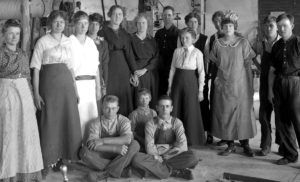
The First World War, occurring from 1914 to 1918, brought unprecedented destruction and violence. The impact of the First World War, in particular, forever transformed the nature of war. This conflict witnessed the deliberate targeting of civilians, the widespread use of chemical weapons, and the introduction of mechanized warfare on a large scale. The death toll reached a staggering 22 million people, with some accounts putting the toll closer to 37 million. However, amidst the chaos and brutality of the First World War, a brief and remarkable moment of peace unfolded on Christmas Day in 1914. It Will Be Over by Christmas Many of the 60 million soldiers sent to fight in the First World War were told that the war would be over by Christmas—a promise that turned out to be yet another falsehood in a conflict plagued with deception and misinformation. After war was declared in July 1914, it became clear by Christmas of that year that there was no end in sight. The Western Front was dotted with trenches, where millions of soldiers were packed together, enduring freezing conditions. Many of these soldiers were astonishingly close to their enemies, with the British and German trenches sometimes separated by a mere 30 meters. According to Daniel Coyle in his best-selling book “The Culture Code”, soldiers on both sides, because of proximity to each other, started noticing shared patterns of behavior and routines of cooking, re-supply, and troop rotations. Deepening the connection was the realization that both sides were enduring the same terror and stress of harsh conditions. On the late hours of Christmas Eve, German troops started opening gifts that they had received from home, including Christmas trees adorned with candles. The soldiers lit their lanterns and placed them along the edges of their trenches, creating a warm and festive atmosphere. As the candles flickered, the sound of carol singing resonated through the air. A Personal Account Bruce Bairnsfather, a British machine gunner who would later become a well-known cartoonist, vividly described the scene in his memoirs. Like his fellow infantrymen from the 1st Battalion of the Royal Warwickshire Regiment, Bairnsfather spent Christmas Eve shivering in the muddy trenches, desperately trying to keep warm. Having fought against the Germans for the past few months, he found himself in the Bois de Ploegsteert region of Belgium. In this unforgiving environment, Bairnsfather, cramped in a trench only three feet deep and three feet wide, faced constant sleeplessness and fear. His days and nights were filled with the repetitive cycle of anxiety, surviving on stale biscuits and cigarettes too damp to light. At about 10 p.m., Bairnsfather noticed a noise. “I listened,” he recalled. The Germans were singing carols, as it was Christmas Eve. The British soldiers in the trenches joined in by singing back. Amid this peaceful moment, a surprising occurrence unfolded. Bairnsfather and his comrades heard a bewildered shouting from the German side, causing them to pause and listen intently. The voice belonged to an enemy soldier who spoke English with a distinct German accent, calling out, "Come over here." In a remarkable turn of events, the British and French troops, inspired by the Germans, also participated in the Christmas truce. Fear and suspicion were set aside as soldiers began to exchange greetings and well-wishes between the trenches. Offers for a temporary ceasefire were communicated and accepted. With the dawn of Christmas morning, soldiers cautiously stepped out into no man's land. They greeted one another and engaged in an awe-inspiring display of humanity. Messages and gifts were shared as soldiers from opposing sides momentarily set aside their enmity. In some areas, caps and jackets were repurposed as goalposts, leading to impromptu and joyful football matches. It is even said that the Germans emerged victorious in one of these games with a final score of 3-2. Another British soldier, named John Ferguson, recalled it this way: “Here we were laughing and chatting to men whom only a few hours before we were trying to kill!” The temporary cessation of fighting continued in certain areas until the arrival of the New Year, but ultimately, the pause proved to be brief and the peace was short-lived. Although there were several other instances of similar truces during the war, none were as widespread or significant as the Christmas truce of 1914. Disapproval from Senior Leaders As expected, certain high-ranking officers on both sides viewed the Christmas Truce with disapproval. They issued orders explicitly forbidding any association with the enemy and warned of potential punishments for those who disobeyed, even execution for cowardice by firing squad for those who attempted to start another truce. However, the soldiers, who were already weary from the war (unaware of the years of continued fighting ahead), chose to take matters into their own hands. They defied the orders and acted independently to establish moments of peace, albeit temporary, amidst the turmoil of war. In an alternate account, it is reported that a German soldier named Adolf Hitler reprimanded his comrades during the Christmas Truce, expressing his disapproval by stating, "Such a thing should not happen in wartime. Have you no German sense of honor left?" Hitler, who was 25 years old at the time, conveyed his disdain for the temporary ceasefire. What Can We Learn as Leaders If enemies on the battle lines can create a culture of safety, respect, and belonging even during war, it suggests that similar conditions can be replicated within organizations. And indeed, there are ways to achieve this. According to Coyle, organizations that foster a strong sense of belonging can address the following questions to ensure a positive response from employees: 1. Are we connected? - Encourage open communication and collaboration among team members. - Foster a sense of unity and shared purpose. 2. Do we share a future? - Clearly, and often, communicate the organization's vision, mission, and goals. - Involve employees in decision-making processes to create a sense of ownership and shared commitment. 3. Are we safe? - Promote a culture of psychological safety where employees completely trust that the organization is a safe place to give 100% while expressing their opinions and taking risks. - Establish policies and practices that prioritize employee well-being and physical safety. To ensure a resounding "YES" to these questions, it is crucial to clearly and consistently communicate the organization's vision, mission, and goals. This can be achieved by: Communicate the purpose: An effective approach to communicate your organization's purpose is by using concise messaging throughout. Avoid using overly complex statements that potential employees may struggle to understand or feel apprehensive about living up to. Articulating the vision: Communicate the long-term aspirations and purpose of the organization. This overarching vision should inspire and provide a sense of direction for all employees. And that they are a crucial part of achieving the vision. Define the mission: Clearly define the organization's mission statement, which outlines its core purpose, main activities, and the value it delivers to its stakeholders. Regularly reinforce this mission to remind employees of the organization's primary focus. My Key Takeaways The Christmas Truce offers valuable lessons about leadership and culture that can be applied in various contexts. Although this event took place over 100 years ago, the lessons we must learn from those brave soldiers are still relevant today. So here are a few of my thoughts and key takeaways: 1. Leaders Set the Tone: The temporary ceasefire during the Christmas Truce was driven by individual soldiers who took the initiative to establish peace. This highlights the importance of leaders setting the right tone and creating an environment that encourages positive actions and behaviors. 2. Humanize the "Enemy": The soldiers involved in the truce showed empathy and compassion towards their supposed enemies. This serves as a powerful reminder that seeing the humanity in others, even in challenging circumstances, can foster understanding and connection. 3. Facilitate Connection and Communication: The Christmas Truce exemplified the power of connection and communication across divides. Leaders should create opportunities for open dialogue, collaboration, and relationship building, fostering a sense of community and common purpose. 4. Encourage Empathy and Respect: The truce demonstrated the significance of empathy and respect in promoting peaceful interactions. Leaders can cultivate these qualities by emphasizing the importance of understanding different perspectives and treating others with dignity and respect. 5. Boldly Challenge Norms: The soldiers who participated in the truce defied the established orders and norms, highlighting the potential for positive change when individuals challenge the status quo. Leaders should encourage everyone in their organizations to think differently and think big. Wrapping Up Even in today's world, the lessons from the Christmas Truce of 1914 remain pertinent. Individuals, regardless of their political beliefs and ideologies, will unite with their families to celebrate the birth of Jesus Christ, who symbolizes peace and salvation. It is a day when we commit ourselves to acts of generosity and spreading kindness to those around us. Afterward, instead of going back to our organizational trenches and shooting at each other verbally from within our siloed walls, we should stay in the “no man’s land” of compromise and conciliation and continue to find solutions to common problems. Like the soldiers in the Christmas Truce, we should make the spirit of goodwill at Christmas last more than one day. By consistently prioritizing and nurturing these elements year-round, organizations can create a culture that fosters a strong sense of belonging, ultimately leading to increased engagement, productivity, and overall organizational success. I wish you all a Merry Christmas and Happy Holidays. Thank you for your continued support and I wish you all the best for the coming new year. About the Author Rich Baron is the Chief Operating Officer and Director of Global Coaching Projects at John Mattone Global (JMG) and a Master Certified Intelligent Leadership® Executive Coach. He partners with C-level leaders and high-potential executives around the world to strengthen trust, elevate culture, and drive sustainable transformation. Rich leads large-scale coaching and cultural initiatives across multiple regions and industries, and serves as a strategic bridge between executive teams, HR, and global coaching networks. He is also the co-host of the Mainline Executive Coaching ACT podcast, recognized as one of the top executive coaching podcasts globally, where he explores the real-world challenges and opportunities facing today’s leaders. Through his work, Rich is dedicated to CHANGING THE WORLD One Leader, One Organization at a Time® by helping leaders move beyond performance and build the inner architecture required to become world-class executives.
By Rich Baron December 15, 2025
Leadership readiness—not employee resistance—is the real reason culture initiatives fail. Discover how to measure and transform culture from the inside out.
More Posts